Showing posts with label topic Portugal. Show all posts

Friday, September 17, 2010

Dia Ultima

The Girls at Casa da Guia
So, today was really really lazy. Didn't rush around at all in the morning, just had a couple cafes, a bowl of cereal, some bread and cheese, unpacked everything and re-packed for the trip home, leaving space for gifts to take home. Michele and I walked over to the Neto's market and chatted with them for a little bit, while Manny was still abed. Picked up some backup batteries for the camera, and a few other things. Walked back to the house and rousted Manny, then we all went out to the local mall and wandered around, picking up a few things to take home. Different set of stores, mostly, but nothing I can tell you about malls here is any different from what it's like at home.


Went by a grocery store and picked up some frozen lasagna (that's not Portugese) for lunch, ate with the whole family, except Manny's younger brother. We went down to a little "fair" by the Boca de Inferno and picked up a few more souvenirs to bring home, cheaply. Stopped at a flower shop and bought a beautiful orchidia arrangement for Irene.

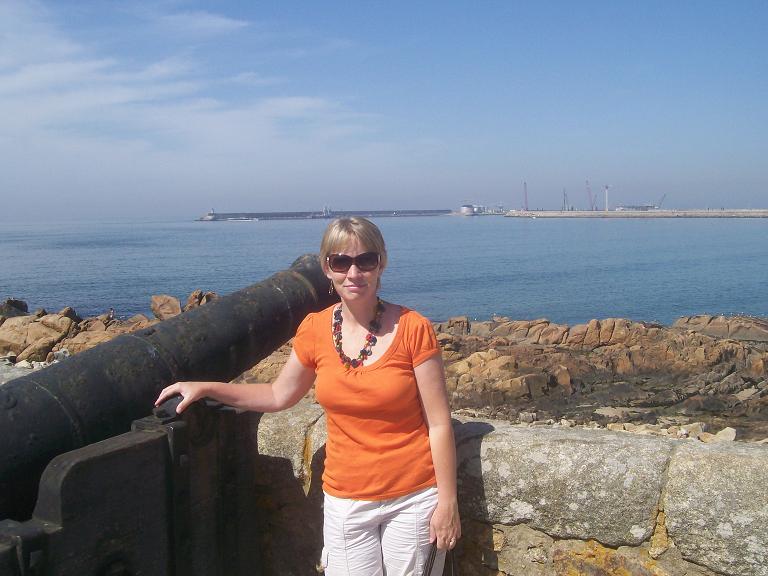
Cliffs at Casa da Gaia
Relaxed around the house, reading, for a while. Around 7 pm, we went with Manny and Lucy and her fiancee, David, down to Casa da Guia, a little commercial area down by the cliffs overlooking the sea, walked around for a bit, then settled in for some cafes and the lovely view, had a great conversation about South Africa, Portugal, and America, the differences and similarities.

Went on back to the house at 9, and Irene had fixed some seafood pasta that was delicious. Manny's friend, Ricardo, had brought us some wine from his mother's brokerage, as a gift to take home, so then we decided, at nearly 11, to zoom over to the store and get some cheeses and sausages to bring home, as well, and Manuel got a couple bottles of port from his store, and we went crazy with the bubble wrap and filled up a suitcase to take home in checked luggage. Here's hoping it all arrives safely in SLC. Off to bed way too late now.

The Countdown Begins

Hopping a trolley
We went next door to the hotel and ate dinner in our last night in Porto at a Churrasceria, bbq joint. Michele had the Frango no Churrasco - chicken, while I had the Alheira a Che Madeira, a stuffed sausage. The appetizers included some marinated octopus, which was tasty and tender. Slept in a bit this morning, as there was nothing pressing on the schedule, then had a leisurely breakfast at the buffet downstairs. There are these yellow/green melons here that are the most succulent ones I've ever had. We had some at the Netos' house in Cascais, and they're on the breakfast bar here daily, so I've been savoring them.


Down by the Riverside
Didn't have anything on the schedule for morning, so we slept in just a bit, then went down for breakfast at the hotel buffet. Got all our stuff gathered up and packed, then left it all in the hotel room and went out for a while. Bought a transit pass for a euro each and climbed on the electrocarro (trolley) and rode around town, transferring to another trolley, then getting off down by the electrocarro museum we'd visited the other day to stroll on down to the Ribeira district, which we had blown past on the bus. Walked around there for a while, had a cafe in a place overlooking the Douro River, then took the funicular near the Luiz I bridge back up the hill to about a block from the hotel.


The Funicular
 Checked out of the hotel at that point, around noon, and left our bags behind the reception desk while we killed the three hours we had before we figured we ought to be at the train station. Decided to walk the entire length of Rua Santa Catarina, the shopping capitol, and had a good time poking our heads inside the shops for a bit. Crossed over eventually to the Avenida Alliados area, and found the nearby open air market, which was fascinating to behold. Fruits, vegetables, fish, meat, cheeses, flowers, plants, nuts, and gallons upon gallons of wonderful olives. The fish market ambience was a little intense for fine dining, so we went on over to the avenue, found a little sidewalk cafe, and I had a franceshina sandwich, while Michele had a cachorro, or hot dog, prepared with the same type of sauce, mildly spicy.

Open Air Fish Market
Back to the hotel, picked up our bags, went to the Sao Bento station, and took the commuter train to Campanha, then waited there for our train. It all went way quicker than we'd allowed time for, so we had a long wait in the train station, reading our books, doing Sudoku, and so forth. The train ride back was more amusing than the ride up. A band of gypsies joined the train just south of Porto, carrying all their worldly belongings in some gigantic blanket bags. Their luggage ended up blocking the doorway out of the car, forcing some people who needed to get off at that point to miss their exit when the train pulled out. The men were all quite drunk when they boarded, and they spent the entire three hours yelling at each other, and walking back and forth to the train car bathroom - I think they continued to drink out of flasks or something the entire trip.


The Melons in the foreground are delicious!
 We made a mad dash for the exit as soon as the train pulled into Lisbon, along with a number of other passengers on our end of the car, hoping to avoid their mess getting their luggage off the train. Turned out, their luggage was still completely blocking the door of that car from opening, so we had to push on through the connecting doors to the next car to get out. The girl behind us was screaming (in English and Portugese) "Go, Go!, quickly!". The gypsies had banged on the door to the bathroom in the train, because they wanted to use it, when the poor thing was in there using it, herself. She was quite panicked. Anyway, it was a different experience.
Manny came down to the train station and picked us up, brought us back to Cascais. He'd had a good first week back at school, and we got ourselves all caught up again. Manuel and Irene had gotten some marinated flank steak and South African sausage on the grill by the time we got home, so we all enjoyed a really nice meal together, then stumbled off to bed.

Thursday, September 16, 2010

The Douro Run

Kids, stay in school, go to college
Today we set off on an excursion touring the Douro valley, the premier wine producing region of Portugal. The van picked us up in front of our hotel, and it was just us and an older Dutch couple, Harri and Lucille, on the tour. We thought we were going on a river cruise up the Douro, but after a long drive inland, we began to realize that perhaps our expectations were incorrect.


Monastery of Santo Goncarlo
 Our first stop was at the town of Amarente, where we got to walk through the monastery of Santo Goncalo. Goncalo was a pilgrim who left his town for many years, and when he returned the townspeople no longer recognized him, he had changed so much. There is a bridge across the Rio Tamega next to the monastery that is the scene of a famous battle against Napoleon's troops where the villagers stopped the soldiers from crossing the bridge. There was also a street fair going on. We didn't have enough time there to look at the goods for sale closely, but it appeared that everything from clothes to melons were on sale.


The gardens and statuary of the sanctuary
Next we stopped in Lamego at the Santuario Nossa Senhora dos Remedios, where there is a nice little church and some lovely gardens. There is a series of stairs and little landings that goes all the way down the hill a couple of kilometers to the city below. It was pretty quiet there, but it looked like a great spot for a weekend picnic.


 We paused for lunch near Regua, on the Douro river, finally, at the Douro IN. We shared a table with our new Dutch friends, who spoke English quite well, and had a great time comparing our cultures and talking about traveling. They've been all over the world over the twenty years, and are in their eighties, hoping to keep going a bit longer. They both had the stroganoff do peru (turkey), and Michele and I had the pescada frita con salada hosa (fried whitefish, I believe, with a mixed vegetable salad). I decided to get adventurous after the meal with a new desert - I thought - and ordered the ananas, which turned out to be a slice of pineapple, very sweet. After cafes, we got back on the road once more.


At the Port Winery
 We went up the Douro river to Pinhao, and up a long winding stone paved road to the Quinta do Panascal, where they grow the grapes to make the Fonseca lable of Port Wine. We took an audio tour of the vineyards, then returned to the winery office for a sample of both the white and red ports, which I found much better than the last port I tried several years ago.


The way back would have passed uneventfully save for a blowout of the rear tire about 30 km from Porto. We had to wait in the van until a repair truck arrived to change out the tire, but fortunately it didn't take too long and we were only about an hour late getting back to our hotel.

Porto, or Bust

This is an attempted reconstruction of a post I lost when the wifi connection at the hotel in Porto gave me problems. Don't get me started on the ripoff that is wifi in Porto.

We woke Manny at o'dark thirty this morning and had him take us to the Oriente train station in Lisbon. Got there with plenty of time to spare and figured out what platform our train was leaving from, so we had a couple of cafes and relaxed beforehand. People in Idaho who have no public transportation options do not fare all that well with the myriad of these things in Europe. Up to a point, you can figure things out, but there's just so much that's left unsaid, assumed.


Kids cooling off in a fountain


Our train turned out to be about tweny minutes late after all, but we climbed on and a few hours later we were in Porto. (coolkids) We arrived at the Campanha station in Porto, and needed to get to the Sao Bento station there, so as to be within walking distance of our hotel, so we checked with the ticket office lady and she told us our ticket was valid all the way to that station, and which platform to stand on. When we got to Sao Bento, we found an information office across the street and got a complimentary map of the city and orientation and directions to our hotel. Walked to the hotel in very warm weather, and arrived sweating and ready for showers. Got checked in and cleaned up, then headed out for a walk around town.


Beatiful women
Our hotel was on the Praca de Batalha. Nearby is the Igreja Santo Ildefonso, covered in blue tiles - we can pretty much see it from our window. turned out to be right around the corner from the busiest shopping street in town Rua Santa Catarina, so we strolled down there first, weaving amongst the crowds and avoiding the beggars. We walked up there several blocks before we turned west and headed a couple of blocks over to the Avenida des Alliados.
(smalliados)There are many amazing buildings on the avenue, and the City council building is at the top of the area. There's a statue out in front of a famous poet of Portugal, who tried over and over and over to be elected to the council. After he died, they still kept him outside. At the bottom of the square, of course, is the mandatory "guy on a horse" statue, commemorating a hero of battle.

A man and his horse
We wandered the city most of the afternoon, and relaxed in the hotel room in the evening, after a meal of fresh fruit and cheeses.

Wednesday, September 15, 2010

Porto, or Bus


Cute sculpture in Porto

This morning we bought a couple of RedLine Hop on/Hop off tour bus tickets. The bus makes a huge loop around the city of Porto, stopping at over 30 places, and you just get on and off with your pass when it comes by every half hour. We rode the entire circuit at first, just to get an idea of what was out there to see, so all of my pictures either have the top rail of the double decker bus in the shot, or some other tourtist's hat. Not the best photo venue, but you cover a lot of ground quickly, and there are sound tracks in all different languages, English is channel 2.


Boats in the bay

We saw the Praca De Joao I, the Avenida dos Alliados, Torre dos Clerigos, where there is a 250 foot tower you can climb to view the entire city. We passed by the Monumento a Guerra Peninsular, where there is a huge tower with the Lion of Portugal on top, the performing arts center at Casa de Musica, the Museu de Arte Contemporanea in the Casa de Serralves, and the enormous Parque da Cidade, a nature preserve. Arriving at the coast, we saw the Forte de Sao Francisco Xavier, known as the "cheese" fort, as it looks much like a huge wheel of cheese. We proceded down a lovely coastal area towards the Douro River, past the Castelo de Sao Joao da Foz, and along the river into the touristy Ribeira area, then across the Douro into the Vila Nova de Gaia, where all the riverboats moor and the port wine cellars are located.


Lady Justice
Turning around, we headed back across the Ponte de Luis I again, through downtown Porto, up past the Se Cathedral and looped back to where we started at the hotel. We then rode the first part of the route again, and went all the way out to the fort on the coast, where we hopped off the bus for the first time and took a very cheap tour of the fort, which is now a memorial for the Commandos of the Portugese military. Cheapest WC in town, by the way. After leaving the fort, we walked along the waterfront on a nice boardwalk, looking at all the bathers and folks wading in the tidepools, until we got to an area where there were a bunch of little cafes, where we stopped for a light lunch. Michele had Salada de Atum (tuna) and I had a Baguette da Delicious do Mar (seafood sandwich), which was a little light on the seafood, but wonderfully crunchy with a nice flavor. When we were done, we continued our stroll all the way down to the Foz, where we waited for a long time for the bus to come by again. I think they go to hourly service in the middle of the day rather than every thirty minutes.


At the Cheese Fort
Stayed on the bus long enough to reach the stop for the Museu de Electrocarros, the tram museum, where we paid 7 euros to go inside and look at their very interesting collection of antique trams from the 1800s and early 20th century. There was also a small area where they obviously entertain kids, with a rather elaborate toy train setup. If we had known it, the ticket we bought at the museum would have allowed us to ride the trams in town for four hours, but we'd already planned to jump back on the bus and head to the south side of the river again, to look at all the boats down there, so we skipped the tram ride, alas.

Mule Drawn Trolley
Hopped on the bus again, rode to the Vila Nova and wandered around there for a while, having an ice cream cone and ice cream bar whilst strolling. Got back on the bus again in a little while and rode the loop back to our hotel, where we are resting up for our night on the town in Porto. I ran across the street the the Fruitaria and picked up some plums and apricots rather cheap, and we snacked on those and some cheese I brought from Cascais. Internet access requires extra payment here at the hotel, so blogging has been sparse, though I may break down and get a few posts up all at once.

Monday, September 13, 2010

The Pilgrimage to Fatima

In the square at Fatima
In 1917, three children were tending their sheep by a tree, when they were visited by the Virgin Mary, who gave them three secret messages. From this beginning has sprung an entire Catholic organization, worldwide, and Fatima is its heart. This town is constantly busy with people making a pilgrimage to attend mass, pay homage to the shrine, perform penances, sacrifice burnt offerings, and be separated from their dollars by the tourist industry there. There is a huge cathedral, and a religious center surrounding an enormous square, and today it was full of folks devoted to the holy city.
Manuel and John, the Baptist
We went into the religious center and looked at the mementos of the shepherd children, the displays of churches under the umbrella of Fatima worldwide, and the worship facility very similar to the Mormon Tabernacle in Salt Lake City. There is room after room devoted to prayer and confession and contemplation of the sacred artwork depicting the life of Christ. There's an entire area where people go to buy candles of all imaginable sizes to light or to throw upon the fire, all run upon the honor system; you just pick out the candles you want, drop your money in a slot nearby, and head for the burning area to light them. On one side of the square, there's a chunk of the Berlin wall to commemorate the new unity of Berlin.

The Tomb of Henry the Navigator
We ate lunch at a very nice little Madeiran place called the Restaurante Santa Rita, I had the linguica and Michele had the coelho na fatima, or rabbit. Everything was delicious, and the place was packed. After lunch we went to the new Museu de Viha Christo, which is a series of tableaus of scenes from the life of Christ, from Mary's angelic visitation all the way to his ascension. Quite nicely done, but very sparsely attended; entry was 7 euros apiece. It did have lovely WCs.

Onward from Fatima to Batalha, where the Portugese fought a decisive battle agains the Spaniards, we visited the Monastery of Santa Maria, where a number of the Portugese kings are entombed, including Henry the Navigator. There's a section of the Monastery that was intended to be a series of seven chapels, on which construction was suspended after Vasco de Gama returned from India, that remains unfinished to this day, which is quite interesting, architecturaly. There was also a huge antique sale going on in the village square near the monastery that had plenty of good old junk.

The overlook at Nazare
We next visited Nazare, a seacoast town with spectacular views and beaches, for a brief break to get out of the car and walk around. This town was just archtypal Europe, to me, with it's picturesque square, narrow streets, peasant garb, and roving bands of musicians. Really would like to go back sometime to explore it further.
Onwards from there to the Lago de Obidos, an immense tidal lagoon near the town of Obidos, where we enjoyed a beautiful sunset, and a quartet of cafes in a restaurant overlooking the water. We made a brief stop after dark to climb up the castle walls in town, before heading back south to Cascais. A great day, just needed more daylight hours to get it all done.

Sunday, September 12, 2010

Down by the Sea

On the Guincho
Today was a planned break from frenetic touring. We got up when we felt like it, got a load of laundry going, and eased into things. Finally got out of the house around 11 and headed up the coast to the Guincho beach. There was a pretty good crowd there already, but we found a parking spot pretty close to the action.

Playing Rackets
What can I say? A beach is a beach. Not in a bad way, but people everywhere seem to use beaches for all the same things, and if you just look at the pictures, you'll see a random beach that could be anywhere in the world. There were people kiteboarding and surfing and playing ball and swimming and windsurfing and building sand castles and going for walks, and flirting with guys or girls, and families having picnics. Nothing surprising, aside from a couple of small biplanes doing aerobatics over the water.

Manny taught us a new game called rackets, which basically involves hitting a ball back and forth between two or more people, that appears to be popular here. We snacked on some juice boxes - they make them in large sizes here, not just the kiddie boxes - and had some custard pastries and some little snack-y chocolate things, mini-biscuits, and swam a bit and laid out on our beach towels. Perfect relaxation.

Palm Beach and Harbor
Manny had some errands to run in the afternoon, so he dropped us off at a beach right in Cascais, Palm Beach, while he did that. More of the same, less windy, more crowds, some topless sunbathers, a cantina nearby. Relaxed there for a couple of hours, wandering into the water when we got too warm, back out again to lay on the sand and bake. The water here is about comparable to the temperature in N. California or the Oregon Coast, I think. Not quite like the warm currents of the Pacific.

Came home and showered up, folded laundry, snacked on some cheese, olives, and nuts. Irene has bacalhau in the oven for dinner, and it smells delicious. Ciao!

Saturday, September 11, 2010

Lisbon, a little slower

We decided to slow down the frantic pace a bit for our second day in Lisbon. We stopped by the travel agent in Cascais in the morning and got our trip up north figured out, then went to the train station and took a short hop into Estoril, a lovely beach town nearby, to look for a music museum from the guides, and spent about an hour wandering up and down the avenues looking for it. Signage here can be, er, problematic. Gave up on the quest and went back to the train station to head into Lisbon.

Over here, public transportation is key to getting around the area. We're still having a tough time figuring out how it all works. In fact, we never did climb on a bus or metro, just the train and that one trolley. I could never quite determine which of the trains into Lisbon actually stopped at Belem, and couldn't find a brochure with a schedule on it anywhere, though there were "schedules" posted on big signs inside the station. Same thing applied to the buses, for me. Next trip to a major metropolis, I must find schedules beforehand.

In the Torre Belem
So, as a result, we hopped off the train at Alges, one stop before Belem. It was lunchtime for us at that point, so we found a nice little cafeteria downtown, reminiscent of one of the old Woolworths, and had lunch with a bunch of local shoppers and businessmen, away from the touristy area of the city. Michele had Salada com Gambas, shrimp salad, and I had Bifinas com Champignous, sliced roast pork with mushrooms and a light gravy, accompanied by rice, salad and fries. We had a little appetizer of (sp?) Queizo Frais, fresh cheese, a little like a cottage cheese in flavor but a sliceable consistency, and bread. We chatted with our waiter about the source of the french fries (London, not Idaho), and had a nice break.

Doc de Bom Successo
Just missed the trolley that went to Belem - actually we were arguing over whether it was the right trolley or not when it went by, Michele was right, I was wrong - so we set out to follow the trolly tracks on foot. Didn't take too long to get to Belem and we found a pedestrian bridge across the street to the Torre de Belem, one of the early fortifications which kept people from coming up the river Tagus to attack Lisbon. We climbed nearly to the top of the tower, and looked out at the scenery. If you're claustrophobic, the spiral staircases there are a nightmare, with people attempting to climb up and down at the same time in a space really meant for one.

Padrao de Descobrimentos
It's a pleasant walk along the shores of the river, through a park, past the marina to the next attraction, and plenty of little souvenir shops and eateries where you can grab a drink or snack. I am happy to report that there was only one boat on the boat ramp on a friday afternoon, though the husband shouting at his wife trying to back the trailer into the water was just like the scene at Lucky Peak back home. From a distance, the Padrao dos Descobrimentos doesn't look all that big, but as you slowly get closer, it assumes Rushmore-like qualities. The monument is designed in the shape of a caravello, a sailing boat, and is lined with the figures of royalty, explorers and other famed Portugese. There's an elevator ride to the top, but we weren't all that interested in waiting in line for it, for a slightly different perspective on the river views. We spoke a bit with an Iranian couple, who now live in Canada, and helped each other get photos taken.

Mosteiro across the Praca
There's a pedestrian underpass nearby, with street vendors and one particularly bad street saxophonist to get by, and we crossed the road to arrive at the Praca do Imperio, a very nice park with a large round central fountain, reflecting ponds with the obligatory horse statues, and lots and lots of park benches with shady spots to relax, check the guidebook, and regroup. Right next to the Praca is the Centro Cultural de Belem, where they hold concerts and recitals, and which also contains a museum of modern art, Museu Berardo. We went inside, where it was A) air conditioned, and B) had very clean nice bathrooms, and spent some time looking at and failing to comprehend pretty much the entire collection. I mean, it's obvious in some undefinable way that it is Art, but it's nothing I'd want to look at in my living room or office for any length of time, so who buys this stuff, anyway? There were a couple of pieces I found more whimsical by a South African artist, but the rest of it left me cold.

Manny had been helping his friend, Ricardo, deliver some cases of wine for his mother's business, early in the day, but he drove into town to join us at this point, and we went into the Mosteiro dos Jeronimos, which is a 16th century monastery, containing the National Museum of Archeology, for a brief look at the church. The place was crowded with bus after bus of tourists, and we decided we wanted to see the more modern side of Lisbon, instead of taking the full tour of the museum. Manny drove us all out to the area where the 1998 World's Fair was held, and we had a nice time at the Oceanario, looking at the marine life, including one pacific otter who is a long long way from home. We promised to say hello to his Northwest cousins when we get back. There was a great display about amphibians, with a ton of exotic frogs. I do love little froggies.

Interior shots never turn out this well
This entire area was an old deteriorating portion of the city before the Fair, but it is a wonderful example of modernity now. One of my favorites was the volcano shaped fountains that burble along merrily for about twenty minutes, then suddenly "erupt", spraying water far into the air. Couldn't catch an eruption on camera as we were driving through, unfortunately. After exploring the area by car, we headed back up the coast to Cascais, stopped at the grocery store to pick up some cheeses, sausage, olives - there are dozens of varieties to chose from here - then to a local chicken roastery - think KFC in popularity, and with a walk-through pickup window - for a couple of whole roast chickens, one buttered, the other spicy, and back to the house to gather with Manuel and Irene and Robert for a late dinner and loads of good conversation after out on the patio, with the cool ocean breeze blowing. I leave you with a peaceful image from the church of the Jeronimos.

Friday, September 10, 2010

Rick Steves' Portugal by Rick Steves

Rick Steves' Portugal
My wife and I love Rick Steves' travel shows. If we happen to be surfing the tube and catch him on PBS, we stop to watch his adventures. So, when I first started thinking about a European adventure, I rushed to the library and grabbed all the stuff by him that they had.

Like all of his travel books, this is packed with information, but not a monstrous tome that you'll wear out your arms carrying it on the trip. Also, like the rest of them, Rick Steves' Portugal has about twenty pages of introductory information that's just generally good advice for travel in any country, with the specific country information pasted in, and some very country-specific practical information in the appendix at the end of the book. The appendix contains a short history of Portugal, information on telephones, email and mail, transportation, holidays and festivals, and a short list of "survival phrases" in Portuguese.

The bulk of the book is broken into sections by area, with instructions about the best way to travel to the location, the main neighborhoods and attractions, great places to stay and to dine, and background information about the area and its sights and activities.

One of the things I really like is the way Steves' whittles down the information on, for example, lodgings in each city to three to a half dozen options, ranked by expense. Most of the places he lists are not going to be found on Orbitz or Travelocity's hotel searches, and he provides contact and reservation information for all of them. He also provides an itinerary for a walking tour in each city, as well as listing various motorized tour options and even private guides for hire.

For the moment, I'm giving this book an excellent rating, but I'll know for sure when I'm done jaunting around Portugal in a few weeks, and I'll update this post then.

Lisbon, on the Run

We went into downtown Cascais first thing in the morning and chatted with a travel agent, Susana, for a while about putting together a trip to Oporto for us for next week, then went over to the Tourismo office and picked up two Lisboa Cards, which serve as passes for the trains, buses, trams and metro, and give free admission or discounts into many attractions. We walked to the train station, hopped on the train to Lisbon, and relaxed to enjoy the ride for about a half hour. The station at the end of the line is about a kilometer short of the Praca do Comericio, which sits at the foot of the Baixa district, and is known by Manny as "the place with the guy on the horse". We hoofed it, ourselves, to the Placa.

From there, we walked several blocks to the place where trolley #28 stops, and jumped aboard, using our passes. While this is a very quaint and amusing way to travel, in the trolley we were packed tighter than sardines (a local delicacy) in a can, and we jumped off after a short distance at the Miradou de Santa Luzia, a great viewpoint from which to catch sight of Lisbon for the first time, never to board public transport again, aside from the train ride home. By this time, it was nearly noon, so on our way afoot up hill, we stopped at a little sidewalk restaurant - there are hundreds of small places, everywhere - called Comidas de Santiago, and Michele had bacalhau a bras, a traditional cod dish with rice, and I had dourada na grelhe com batatinhas em casca, grilled bream with potatos and vegetables. All extremely delicious, and we cleaned our plates completely.

Proceeding further, and still on our tour plan, up the hill to the Castle of Saint Jorge, where we bought discounted tickets, and got to browse the museum of pottery shards - not its real name, but that's about the extent of the collection. The site has been occupied by people for thousands of years, and everything from bone needles to terra cotta roof tiles were left behind. The castle, itself, has been restored over the years, and its walls are great to climb on, and a great photo opportunity, with more lovely views of the city. Be sure to check out the medieval sound systems while you are there, they're still used for concerts today.

At this point, our carefully laid plan began to fall apart, as we decided to head directly for the Convento do Carmo, rather than following the tram line back down the hill, and we didn't see the area where the free buses were shuttling folks back to the square. Our maps didn't contain any of the warren of narrow streets that we encountered, and we navigated by sun and stars until we finally came to a place called Martim Moniz that was listed on the map. It was hot, sweaty work and Michele and I were both growing a bit cranky by the time we got ourselves oriented and on the way to our next landmark, the Rossi, which contains a major train station. I was walking east at one point when I realized I wasn't quite sure that was taking us where we wanted to go after leaving Rossi  (I still got confused, just writing about it), so I did an about face, and was fortunate enough to spot the Elevador de Santa Justa, one of the ways up the hill to the convent.

Our passes gave us a discounted entry to the Convento do Carmo and Archeological museum there, and it turned out to be cooler inside, complete with a WC, which made it all worthwhile, above and beyond the interesting artifacts there. Public restrooms are a little sparse and difficult to find in the city, so you find yourself going into a small cafe and buying something to eat or drink, in order to use the facilities. The convent was partly destroyed in 1755 in a massive earthquake here, and never rebuilt. We spent a half hour or so here, relaxing and enjoying the museum, sitting on the steps and having a drink of water.

After leaving the convent, and stopping at one more church nearby, we decided that was about enough of museums for a while, so we broke off the original plan and began to alternate guide books for ideas on where we wanted to go next. We went to the Miradou Sao Pedro de Alcontar, another nice park where you can relax on a bench with a cool drink and look out over the east side of the city, then on up the road to the Praca Principe Real, a gorgeous park filled with trees and with some truly amazing fig trees, reminiscent of one from my childhood in Santa Barbara that's hundreds of years old. There's a "water museum" listed in the guide book that we decided to go see. Big ripoff. Just a stone water tank, no displays, no tours, no discount with our card. Onward to the Jardim Botanical, where we wandered for a while among the trees and plants in the shade. A great place to wind down, and you could probably spend hours there. Unfortunately, it isn't free with the Lisboa card, and the butterfly exhibit had closed at 5, so we weren't able to enjoy all it had to offer. I was waiting on a bench for a while in the spot pictured above for Ranger Murray to come give a nature talk, but I guess he must have been busy.

Enough of Lisbon for one day on our plate, though we took a number of photos of more statues along the way downhill, we headed back to the train station, went back to Cascais, and had a fantastic meal of seafood stew for two at a restaurant called Checkers. Full and happy, we went back home, and eventually, to bed.

Thursday, September 9, 2010

Strolling in Sintra

Didn't try to get too early of a start yesterday morning, actually even slept in a bit, especially for me. Around 10:30 am Manny drove us into Cascais downtown and we had a bit of breakfast in a little cafe in the Jumbo store. The lady at the counter there was from Angola, and spoke very good English, gave us a full rundown on the menu and the operation of the lunch counter. Amazing thing was the prices. I had a presunto and cheese croissant and a double espresso, and Michele had a croissant with strawberry jam and a single espresso, and it was only 5 euros, 60! I think I'd have paid that much just for the drinks at Starbucks.

Went by a travel agent in the downtown area, Jorge, and talked with him about getting in a trip to Spain for a few days next week, but all of their packaged tours had the wrong departure dates. We talked with him for quite a bit, and came away with some suggestions of side trips wrapped around a core trip to Porto, up in the north part of Portugal. We spent a couple of hours strolling through the shops down by the beach, bought a beach towel, had some gelatos at Santini's, which is evidently frequented by the rich and famous. I thought I bumped into Angelina Jolie in the WC. Went by the toursimo office and gathered some information from them, bought a Portugal map, after they were done with their lunch break at 2:30. There was a flea market in progress, and I just couldn't resist the book table.

We stopped by the house to pick up Manny's younger brother, Roberto, as he needed to do some back to school shopping. Students here, in all grades, are responsible for buying all their textbooks and supplies, just like college students in the U.S., and the department stores actually sell textbooks. Manny drove Michele and I up to the historic area of Sintra, about 15km away, and dropped us off there, with Irene's cell so that we could call him when we were ready to come home. A role reversal from four years ago, when he lived with us, eh?

We visited the Ferreira da Castro Museum. da Castro was an author, contemporary with Hemingway, nature lover and ecologist. The front desk lady gave us a pamphlet about the museum longer than most doctoral dissertations, in English. He traveled widely, and turned to writing travel and adventure books after his early works were censored for political reasons, I believe. We sampled some ginginja, a legendary local cherry liqueur or maybe brandy, in little chocolate cups - delicious!

Sintra is filled with small shops, most of which cater to the well-off tourist crowd. There were some lovely things for sale, but a 250 euro handbag is just a little bit out of our league, so we enjoyed the hunt of shopping, rather than the kill, so to speak. Down by the park, handicraft artists lay out their wares on a little guard rail near the embankment, and Michele did find a couple of pretty necklaces that were only two for 6 euros, so she made her first purchase in a foreign currency. There's a series of abstract sculptures in the park area there that I really didn't quite get, except for a highly functional one I rather liked.

We discovered the Museum of Pedro Anjas Teixera, a very talented sculptor, not in the least abstract, where we spent about 45 minutes, and covered things very thoroughly. Sorry I can't oblige you all with the obligatory nude European statuary, though those works were quite good, but I took more photos of his other stuff, such as the praying mantis battle at left, and The Good Gardener Frog, which I'll have to send to my mother, avid collector of frog statuary that she is - the picture, not the actual statue.

We were going to have a light meal of appetizers in the local crepery, but when we sat down and looked at the menu, the prices were completely ridiculous, and the waiter, like all French waiters everywhere are required to do, ignored us long enough that we made up our minds to go elsewhere for our simple peasant fare. Found a little place called the Village Cafe tucked away by the church and had some cheese, olives and chorizo that was just mind-numbingly tasty and  couple of beverages for about 11 euros instead, while watching CNN on the big screen. Lot of terrible things going on in the world, but we're on holiday from all that, don't you know.

Called Manny a little bit later to come pick us up. Wandered over to the palace in town. We'd been by it earlier and thought about taking the tour, but it was closing in 30 minutes so we felt we just couldn't do it justice and skipped it. Heard a conversation in English between a couple going the same direction, and had a nice little chat with some Canadians from Vancouver on holiday. Michele took a picture of them and their toddler. Can't imagine traveling with small children, Michele has a tough time just keeping me out of trouble.

Came on home to a baked salmon and rice meal that Manny himself had prepared for us and his parents. Sat down with him by the computer after dinner to nail down the itinerary for the rest of the time we're here. My free-wheeling ways properly curtailed, I doddered on off to bed.

Wednesday, September 8, 2010

Have fun in a storm in the castle

We got ourselves together in the morning and left Manny's apartment, then stopped at a little cafe and had a very milk-y espresso and some tasty flaky pastries for breakfast there. Fueled up, bought some water bottles and headed north and westwards, intending to do a little sightseeing on the way to Coimbra. The best laid plans, you know...

Somewhere in the countryside, when a "Monumento" sign appeared, Manny said he had no idea what it was, but that it meant that there was something interesting and historical that direction, did we want to check it out. Being the bold and intrepid sorts, we of course said "yes", and we were thereby able to encounter our very first Roman ruins, Quinta de Fornea. The signs were all in Portuguese, but we had Manny to translate, and got to enjoy wandering through them.

Heading further north from there, we saw another "Monumento" and pulled off the road at the little city of Belmonte, where we found our way to the tourist information booth after a bit, and got a nice orientation on the local sites from a worker who spoke English quite well. The town had a castle, several old chapels, and an old Jewish quarter, synagogue and museum.

We started with the castle, which turned out to have its interior courtyard full remade into an ampitheatre for musical or stage productions. We were still able to clamber around on its walls and take some pictures of the views from there, though the weather had gotten a bit cold and nasty, and began to drip rain on us. There were other tourists coming and going at a fairly steady pace, when a women came in and shouted at all of us that the castle was closing for lunch, and we'd need to leave. Manny engaged her in conversation, and we found out that all of the attractions there would be closed for the next hour and a half, so we never got to see the Jewish quarter.

Heading further north, we saw another sign...you can see how the day is going. At this town, we pulled off to look at some more Roman ruins, Torre Centum Cellas, this time containing a tower that may have dated from Roman times, as well, but there were no placards posted with anything about the site, so we just had to guess. The north central portion of the country is "heavily" forested, and reminded us a great deal of some portions of Idaho. The scent of the pine trees made us feel right at home as we drove, turning west to make a "brief" stop in Viseu. Manny phoned a friend of his from college whose home is there to ask her about the local attractions, and she told him that there were "some churches" we might find interesting near the center of town. While he was talking to her, I took a photo of a very interesting pizza place (left), which unfortunately is no longer in operation, so we weren't able to go inside.

We found a parking spot near a historical-looking convent, and headed for one of the local cafes  for a quick pick-me-up espresso before exploring. The espresso, by the way, was twice as good as Starbucks' and only cost .60 euro or 78 cents! We followed the signs to find the local tourist information office, where we found a very chatty Portuguese girl, (for a mental image think Joan Jett) who has lived off and on in New York for the last twenty years, and who told us what route to walk to see the really important stuff, and a map of the downtown area.

Most guidebooks will mention these tourist information offices and suggest you stop by them for help. However, they're listed in the books as TIs, and the signs that point to them say "Tourismo i", and are very difficult to follow, as they assume that when you're within a couple of blocks of the office, you'll be ok. Great sources of information, usually with English/French/German/Italian speaking employees, but in my small bit of experience so far, tough to find. The one at the castle was listed on the large site map, but had been moved sometime after the sign was created, and the one in Viseu suddenly was across the street and down the block without any signs about the change in directions. Worth the hunt, though.
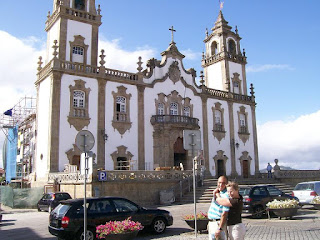
We stopped at an art museum, Museu Almeida Moreira, which displayed some lovely pieces of (mostly) Portuguese artwork from the collection of Moreira, who was a wealthy military man and art collector, curator of the Grao Vasco museum at the Se, which we visited next, and died without children, so he left his collection to the people. I understand there are many many artworks stored there, but the funding so far has only allowed them to display a small sample. My favorite painting was one of a ship on the high seas by Luis Ascencio Tomazini. I gotta remember to google him later.

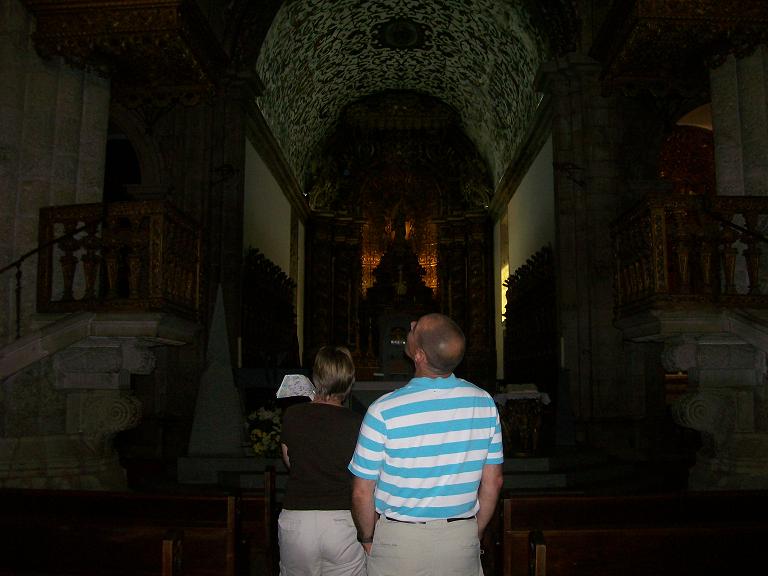
Unbeknownst to any of us, Viseu was once the heart of Catholicism in Portugal, and the Holy Se, residence of high church officials. The Misericordia church and museum, pictured above, were closed for renovations, but the Cathedral and its museum were not. We sort of poked around one old portion of the cathedral for a while, taking some pictures, then wandered over the the cathedral proper, where we were totally blown away. It didn't look like much from the outside, but the splendour inside was absolutely crazy. I was muttering to myself, variations on "Holy Moley" the entire time we were there.

The cathedral began construction in 1092, finishing early in the 12th century, and is still in operation today. There were plenty of black clad blue-haired old ladies coming and going, spending time there in prayer, as we and others toured. Immense vaulted ceilings, with massive knotted ropes carved in stone. Gold leaf covered ornate altars and shrines to the Virgin Mary. You know the drill, but you never really "get it" in your gut until you stand in the middle of one of these places, and everywhere you turn your eyes, there's some new piece of holy artwork. The lighting inside made it very difficult to get good pictures, unfortunately, so I ended up buying a postcard from a souvenir store a bit later.

At the front of the cathedral, near the altar, there was an unadvertised doorway with stairs leading upstairs, and I could see an attended counter at the top, so we headed that way. This turned out to be the entrance to Tesouro Meseu da Catedral de Viseu, and for a 2.50 euro fee we were given brochures and the chance to view the holy relics there. Again, words do not properly express the time, detail and expense that must have been spent on creating these expressions and trappings of worship. There were many statues of saints, including several, such as Loyola and Augustine, that I recognized.

There was an amazing carving of the nativity scene (18th century?) perhaps four by four feet, with far more attendants at the Christ child's birth than I remember being in the story, including a man from the tropics in a plaited skirt and an elephant, as well as some folks in tophats and suits. Illustrated manuscripts, a gynormous hymnal of Gregorian chat from which Michele was able to hum the tune, priestly vestments embroidered in gold, massive golden rings and jeweled crucifixes, ivory carvings from the time of the Portugese explorers.

Around 5:30 in the afternoon, we made the decision to skip Coimbra, as we'd arrive there very close to dark the way things were going. There was a big fair going on on the far end of town, which was supposed to have plenty of booths filled with local handicrafts, so we set off to find the Pavalho MultiUso. The local handicrafts, however, were limited to some glazed terra cotta pottery and embroidered linens, mostly, and the fair was filled with the usual junk that we'd not be surprised to see at the Western Idaho State Fair - a much shorter journey. We did have a nice simple meal of traditional bifanas, pulled pork meat with a light sauce, wrapped in buns with a crispy crust, before getting on the road and heading more or less directly back south to Cascais, a three hour drive.

When we got home, we got to meet and talk with Lucy, Manny's older sister. A very nice young lady, who studied music, she and Holly would get along quite well. Off to bed way too late for this old man, and I actually ended up sleeping in till after 8 this morning.